
 By
By
Your dryer’s lint screen catches a lot of lint, but not all of it. Over time, lint can collect inside the dryer vent—the duct that carries hot, moist air from the dryer to the outside. As that buildup grows, it can restrict airflow, make the dryer work harder and create a potential fire hazard.
So, how often should you clean your dryer vent?
For most homes, inspect and clean the full dryer vent at least once a year.
The U.S. Fire Administration recommends annual dryer vent ductwork cleaning, while homes with heavier dryer use or challenging vent configurations may need service more often.
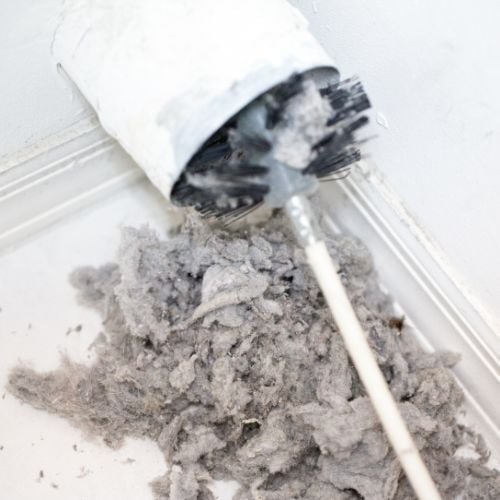
Why Dryer Vent Cleaning Matters
A clean dryer vent gives heat, moisture, and lint a clear path outdoors. When the vent becomes restricted, hot air stays inside the dryer and duct longer than it should. That can lead to several problems.
A Clogged Vent Can Increase Fire Risk
Lint is combustible. When lint buildup restricts airflow, temperatures inside the dryer and exhaust system can rise. The Consumer Product Safety Commission warns that heat buildup caused by blocked airflow can create a fire risk.
According to the U.S. Fire Administration, failure to clean was the leading factor contributing to ignition in 31% of home clothes-dryer fires reported from 2018 through 2020. Regular cleaning cannot eliminate every possible dryer hazard, but it can address one of the most common preventable factors.

Clothes May Take Longer to Dry
A dryer needs steady airflow to remove moisture from clothing. When lint restricts the vent, a normal load may need an extra cycle or take much longer to dry.
The CPSC identifies clothes that remain damp after a typical cycle, or that take longer than usual to dry, as possible signs of a blocked lint screen or exhaust duct.
Long vent runs and ducts with several bends can make this problem worse. The U.S. Department of Energy notes that excessive vent length and bends can allow lint to back up, increase drying time and create a fire hazard.
The Dryer May Work Harder
Restricted airflow can force a dryer to run longer to complete each load. That means more energy use and additional operating time for the appliance.
The Department of Energy states that proper dryer venting helps a dryer operate more efficiently and last longer.
A dryer that suddenly needs two cycles may not have a failed heating element or thermostat. The problem could be airflow restriction somewhere between the appliance and the exterior vent opening.
Gas Dryers Need Safe Exhaust
A gas dryer's exhaust system carries combustion gases, including carbon monoxide, outside the home. A blocked, damaged, or disconnected duct can interfere with that process. HUD treats restricted dryer-vent airflow and blocked exterior terminations as serious deficiencies because of their potential effects on indoor air quality and fire safety.
Evaluate gas-dryer vent concerns promptly. Gas dryers should also receive periodic professional inspection according to the appliance manufacturer’s recommendations.
How Often Should the Vent Be Cleaned?
For most households, use this maintenance schedule:
• After every load: Clean the lint screen or filter. Both the CPSC and U.S. Fire Administration recommend removing lint before or after each drying cycle.
• At least once a year: Have the complete vent system inspected and cleaned from the dryer connection to the exterior termination.
• Sooner when warning signs appear: Do not wait for the yearly cleaning date if drying performance or airflow changes.
• More often for higher-use systems: Large households, frequent laundry loads, long duct runs and vents with multiple bends may require more frequent attention.
The right schedule depends on how often you use the dryer, the length and design of the duct, the vent material, and the dryer manufacturer’s instructions.
Signs Your Dryer Vent Needs Cleaning
Schedule an inspection if you notice any of these warning signs:
• Clothes are still damp after a normal cycle.
• Loads take noticeably longer to dry.
• Airflow from the outdoor vent is weak or absent while the dryer is running.
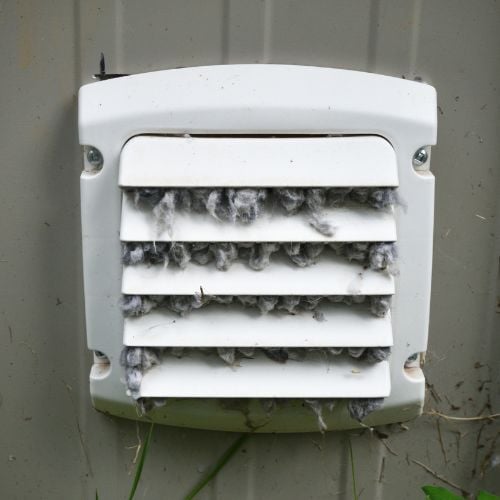
• The outside vent flap does not open properly.
• The dryer or laundry room feels unusually hot.
• There is a burning or overheated smell.
• Lint is collecting behind or around the dryer.
• The vent duct is crushed, kinked, loose, or damaged.
• The outside opening is blocked by lint, debris, vegetation, a nest, or snow.
Stop using the dryer if you smell something burning, see smoke or find evidence of overheating. If there is a fire, leave the home and call 911—do not try to move or inspect the dryer.
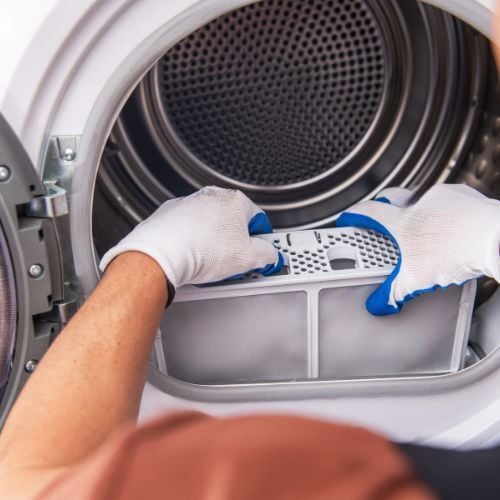
The Lint Screen Is Not Enough
Cleaning the lint screen after each load is essential, but it is not the same as cleaning the dryer vent. Small lint particles can pass through the filter and accumulate in the transition duct, the vent inside the wall, and the exterior termination.
Lint may also collect beneath and behind the dryer or inside the appliance cabinet.
The Consumer Product Safety Commission recommends periodic cleaning around the dryer and having a qualified service professional clean the interior of the dryer chassis when necessary.
In other words, good dryer maintenance has several parts:
• Clean the lint screen after each load.
• Check the exterior vent for strong airflow and proper flap movement.
• Keep the area around and behind the dryer free of lint and clutter.
• Inspect the visible duct for crushing, kinks, or damage.
• Clean the complete exhaust path at least annually.
Vent Material and Routing Matter
Cleaning may not fully solve the problem if the vent system is poorly installed. Plastic and thin foil accordion-style ducts can sag, crush, or trap lint in their ridges.
The CPSC recommends rigid or corrugated semi-rigid metal duct because it provides better airflow and is less likely to be crushed or kinked.
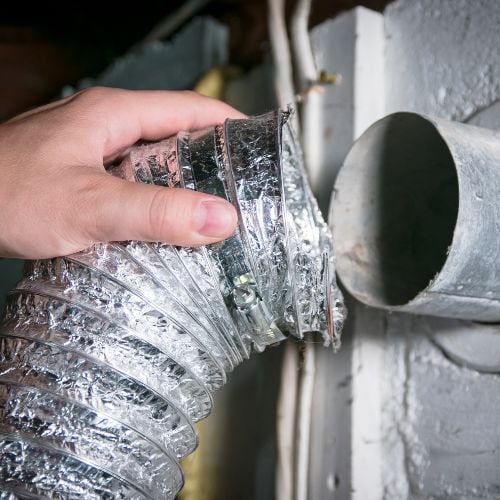
The vent should also be as short and straight as practical, properly supported and exhausted outdoors. The Department of Energy advises using an exterior termination with a backdraft damper and without a screen or cage that could trap lint.
If a vent repeatedly clogs, the system may need more than cleaning. A technician may need to correct a crushed transition duct, loose connection, excessive duct length or restrictive routing.
Can You Clean a Dryer Vent Yourself?
Homeowners can safely handle several routine maintenance tasks, including cleaning the lint screen, vacuuming accessible lint behind the dryer, and checking the exterior opening for visible blockage.
A professional inspection may be the safer choice when:
• The duct travels a long distance through walls, ceilings, or floors.
• The exterior termination is on the roof or otherwise difficult to reach.
• The dryer is gas-powered.
• The duct is crushed, disconnected, or improperly installed.
• Drying problems continue after accessible lint is removed.
• There is a burning smell or evidence of overheating.
• The dryer itself may need diagnosis or repair.
Professional service can also help distinguish a clogged vent from a failing heating element, thermostat, blower, sensor or another dryer problem.
Protect Your Dryer and Home
Annual dryer vent cleaning is a relatively small maintenance task that can improve airflow, support efficient drying, and address preventable lint buildup.
Clean the lint screen after every load, inspect the outside vent periodically, and take changes in drying time seriously.
If your dryer takes too long, runs unusually hot, or shows signs of restricted airflow, contact Niceley’s.
Established in 1994, Niceley’s is a family-run Northern Kentucky business providing expert appliance service and repair for all major brands.
You will receive live, local help, upfront pricing and quality service from a team that understands how important a properly functioning dryer is to your household.
Call Niceley’s at 859-342-9900 to schedule dryer service or ask about dryer vent inspection and cleaning.

Dryer Vent Cleaning FAQs
References
https://www.usfa.fema.gov/prevention/home-fires/prevent-fires/basement-and-garage/
https://www.usfa.fema.gov/prevention/home-fires/prevent-fires/appliance-and-electrical/
https://www.nfpa.org/downloadable-resources/safety-tip-sheets/clothes-dryer-safety-tip-sheet
https://www.usfa.fema.gov/index.html
https://www.nfpa.org/for-professionals/codes-and-standards/list-of-codes-and-standards/free-access
https://www.nps.gov/articles/p52-dryer-lint-uses.htm